
Richmond


Williamsburg

Trail Count

Yesterday's Activity

Virginia Trails Alliance: Recommendations to Improve and Support Trail Development Across the Commonwealth of Virginia

Virginia Trails Alliance Logo.jpg

July 27, 2020

Office of the Governor
P.O. Box 1475
Richmond, VA 23218

Dear Governor Northam,

Thank you for all you have done to support trails and green spaces in Virginia specifically most recently the creation of the Office of Outdoor Recreation and funding a study for the Ashland to Petersburg Trail. We are grateful for your current and future commitment to trails and green spaces in Virginia.

From the famous Appalachian Trail to the Beaches to Bluegrass Trail, land and water trails connect communities and are vital to Virginia’s outdoor recreation economy and public health, especially during the ongoing COVID-19 pandemic. The Virginia Trails Alliance is a coalition of trail organizations and businesses that creates an annual common agenda with the intention of improving and supporting trail development across the Commonwealth of Virginia.

Trails across our Commonwealth have seen a significant increase in use due to COVID-19. Charlottesville’s trails have seen a 300% increase in use and the Virginia Capital Trail saw a 77% increase in use during the month of May compared to the same month a year ago. With increased trail usage, the Virginia Trails Alliance encourages you and your administration to consider the following recommendations:

  • Funding for New Trails and Maintenance: Create a new, recurring funding source of $25 million to fund needed maintenance of existing trails and building new and developing trail systems like the Appomattox River Trail, the Roanoke River Greenway, the Potomac Heritage National Scenic Trail, and the James River Heritage Trail.

  • A Statewide Trails Study: Fund and implement a statewide trail study to help identify communities lacking adequate access to trails and green spaces and show the value of trails on the economy, public health, workforce productivity, and community development in Virginia.

  • A Governor’s Conference on Greenways, Blueways, and Trails: Host a state trails conference that collaborates with industry leaders on the best practices of trail development and green spaces. The last Governor’s Trails Conference was held in 2008.

  • A Virginia Trails Signage System: Create a common signage system that would raise the visibility and profile of Virginia’s trails, improve wayfinding, and create a more connected network of trails. This program could be implemented through the Virginia Department of Transportation and/or the Department of Conservation and Recreation.

  • Designation of Greenways and Trails Program: Create a program, similar to the Scenic Rivers program, to identify, designate, and protect Virginia’s trails and greenways. A designation program for trails and greenways will give recognition and public awareness to different trails and create an interconnected network throughout Virginia.

We are committed to working alongside you and your administration to advance our agenda and welcome an opportunity to meet with you and your Secretary of Natural Resources, Matt Strickler, in the near future. Should you wish to schedule a meeting with the Virginia Trails Alliance, please contact our President, Cat Anthony, at <804-840-6610> or cat@virginiacapitaltrail.org.

Sincerely,

Virginia Trails Alliance

Capital Quarantine Challenge: Finding Freedom and Confidence on the Trail

One Family’s Heartfelt Adventure to Conquer the Capital Trail in 8 Weeks

IMG_0306.jpg

Celebrating a birthday in the midst of a pandemic can be a bit disheartening for anyone, especially when you’re young. Determined to not let quarantine derail her son’s 7th birthday, Molly suggested he choose an outdoor activity to commemorate the special day. The day’s celebration event, a 10-mile round trip adventure on the Capital Trail. This would be their first family visit to the Trail but not their last.

Back in February, Molly had “requested” a set of bikes for her birthday or rather strongly encouraged her family to let her buy them each a bicycle in honor of her special day. They finally relented. She had no idea at the time what a lifeline they would turn out to be. Fast forward a few months to the big “7” birthday bike ride and the Brannan-Jones family was hooked! When Molly later heard about the Capital Quarantine Challenge, she immediately knew this was the perfect social distancing adventure for her family: fresh air, a fun physical activity, and a worthwhile challenge the whole family could experience together.

For the next eight weeks, every Sunday or Saturday afternoon (depending on the weather), they hit the Capital Trail for their 10-mile adventure that included five miles out and back. Armed with snacks and plenty of water, they would pick up where they left off the following week, letting their 7-year old son set the pace. As his endurance grew, the mileage steadily increased until before they knew it, they were completing up to 12 miles weekly.

“We found a freedom in our weekly rides that we were losing everywhere else. For a few hours every week, we could escape from the news, feel the wind in our hair, and pretend that everything was normal.”

0902536A-6EBD-42F1-B400-7ADF8869B825.jpg

MEMORABLE MOMENTS AND CHALLENGES

Everyone loved the weekly cycling adventures, including Molly’s 5-year old daughter. She rode on a trailer bike attached to Molly’s bicycle, which allowed her to participate in the ride while also enabling her to take a break from pedaling when she needed to rest.

One of the most exciting parts for Molly and her family was the ever changing scenery. No ride was ever the same, each route promised something new. They especially loved the beautiful vistas and geographical changes from the city skyline to fields, marshlands, and wooded forests. Not to mention the diversity of the people they encountered on the Trail. People of all ages and abilities, cyclists, walkers, runners, and roller bladders. Each ride offered a new experience.

To add to the excitement, Molly used the mile markers as an incentive to keep everyone motivated and energized!

“Every time we reached a new mile marker we rang our bells in celebration, and it became a game to see who could spot the marker first. For the last dozen or so miles, the number of rings matched the number on the marker (since we were going “backward” on the trail).”

For the Brannan-Jones family, the most difficult challenge hit them right from the start, the dreaded hill heading out of Richmond. At the beginning of their first leg, they also encountered their first and only crash. Molly was impressed with the attention and generous concern her son received from the cyclists nearby who stopped to see if they were alright. Not discouraged in the least, her son jumped back on his bike and off they went to finish the day’s trek. Later that afternoon, they tracked their first week’s progress on a map, a routine they incorporated after each ride.

“When we completed a ride, staggering in the door sweaty and satisfied, the kids would help us fill in our progress on a map of the trail we printed and posted on the fridge.”

The best part of the challenge for Molly was seeing the change in her son, watching him build confidence, learn to overcome challenges, and regain some of the freedom he had lost from COVID-19. Her most memorable moment, witnessing her son, little legs pedaling like crazy, tackling the final hill as he went up and over the Chickahominy River Bridge. A visual reflection of how much he had grown mentally and physically over the last eight weeks, from the first hill out of Richmond and the obstacles it presented to the last hill over the Chickahominy River and how differently her son attacked it with strength and confidence. The entire eight-week, 51.7-mile adventure, is something the Brannan-Jones family will remember and treasure always.

MOLLY’S TIPS AND STRATEGY

Are you looking for a fun challenge for your family this summer? Molly’s shares her simple tips and strategy:

  • Pack plenty of healthy snacks and water. Hydrate often and take frequent breaks!

  • Bring a first aid kit. Accidents will happen, especially when riding with children.

  • Start slow, let the children set the pace. Be mindful of the heat index when planning your start and stopping times.

  • Plan ahead. Study the route ahead of time, learn where the hills and restrooms are, and have a parking plan. Explain the route to your children so they know what to expect. Talk about what they will see, when your breaks will be, make it a fun adventure but remember to be flexible. Plans can change out on the Trail.

  • For the longer car rides as you go further from home, bring games and activities to keep the children entertained.

  • Make sure everyone has a bike, trailer or trailer bike, etc., that they will be comfortable in for the duration of the ride and that you have a way to transport the bicycles if you do not have a bike rack.

  • Involve everyone by giving each family member a job to do. Even small children can help pack snacks.

  • Focus on the goal! Print off the map and highlight the sections you have completed. Put the map in a visible spot, like on the fridge, as a reminder of your accomplishments.

  • Recognize weekly accomplishments with small rewards for each completed section and of course the big one - completing the entire Trail. It doesn’t have to be big, something as simple as stickers or going out for ice-cream. Molly gave everyone in her family a VCTF buff to commemorate their final mile milestone. And of course, everyone in her family was very excited when they received their Cap Trail Quarantine shirts and certificates of achievement in the mail.

  • Make it fun! Incorporate the mile markers with a fun activity. Ring… ring… ring… when you spot a mile marker ring your bell or take a family picture. 

  • Above all, enjoy the experience! Don’t be in a hurry, be flexible, and enjoy it!

52 miles may seem a bit daunting and unrealistic, especially with small children, but with proper planning and the right mindset it could become one of your most memorable adventures.

Thank you to Molly Brannan for sharing her family’s remarkable and inspirational story with us!

Conquering the Virginia Capital Trail by Bike

Image-1%2B%25281%2529.jpg

Have you been thinking about riding all 51.7 miles of the Virginia Capital Trail? Our Trail Ambassadors have come together to offer some tips and tricks to help you achieve your goal! 

John Bander, one of our Trail Ambassadors, asked himself, “Am I ready to ride the Capital Trail end-to-end?” Mr. Bander offers this piece of advice, “If you can say ‘Yes’ to this then you have a 95% chance of being successful.” Completing the Capital Trail is about determination and taking frequent breaks. 

DSC_1920.jpg

Before you start, look over the Virginia Capital Trail Map and plan stops along the way to rest or refuel. Pack plenty of water and healthy snacks (like trail mix, bananas, etc). Breaks are important, so try to get off your bike every 10-12 miles to stretch your legs, HYDRATE, and eat a snack. Stop more often for food and water breaks than you think you’ll need. One tip that was suggested was to pedal standing up for a few seconds every 3 miles to quite literally give your butt a break!

Check the weather before you plan to ride and if it’s in the hotter months, it is best to start early to beat the heat. Depending on the weather it may be best to wear layers so you can shed them as it starts to heat up. If you want to get extra technical, check the wind speed. This might help you decide on where to start, Jamestown or Richmond. 

quarantine+challenge.2+%281%29.jpg

You can accomplish the Trail solo or bring along a group of friends to keep you company, but don’t forget to tell someone about your planned route and start/finish time! Either way, do not forget your cell phone in case you run into any mechanical issues, an extra tube or two, your helmet, a patch kit, a mirror (handlebar or helmet), an extra bike pump, a basic first-aid kit, and sunscreen. 

And at the end of the day, remember “51.7 [miles] isn’t too bad and it shouldn’t be a race. Just go slow and steady and enjoy it.” -Ambassador, Joe Brown

Do you have any suggestions?  Feel free to post in the comments section.

A special thank you to all of the Trail Ambassadors who helped piece this article together.

Unstoppable at 69: a 43-year Old Bike Sparks a New Passion

When Trail user Mary Arnold, age 69, decided to get serious about bicycle racing, not even an injured knee or black widow could make her brake.

Mary is a member of the Sweet Spot Women's Race Team - a group of amazing women! - Bike Route 1

Mary is a member of the Sweet Spot Women's Race Team - a group of amazing women! - Bike Route 1

In 2016, Mary, an avid runner, blew out her knee but that didn’t stop her. Not one to sit around, she knew she needed to find a new passion. It had been over 25 years since she had sat on a bicycle, but Mary dusted off her 43-year-old bicycle and hit the Capital Trail. As her endurance grew and her rides became longer, she discovered it was a great way to explore her community, get energized (lots of endorphins), and feel the wind on her face. Mary enjoyed it so much, that she decided to compete in the upcoming Virginia Senior Games. Unbeknownst to her at the time, Mary was the only person to race in her age category. Not only did she walk away with her first gold, but she also qualified for the National Senior Games in Albuquerque. One race and she was hooked. She had found her sweet spot in the women’s racing realm.

On the podium at the Blood Sweat and Bacon time trial in Smithfield, 2019

On the podium at the Blood Sweat and Bacon time trial in Smithfield, 2019

With Albuquerque in her sights, Mary started riding in earnest, bought a new bicycle and started training with a coach. On her new set of wheels, Mary hit the Trail and her neighborhood section of Bike Route 1 with renewed dedication racking up almost 1,000 miles on the Capital Trail alone. Unfortunately, fate interceded one morning when Mary awoke with abdomen pains and nausea. What she thought was appendicitis turned out to be the venomous bite from a black widow spider. The bite left Mary feeling drained for several weeks, but she refused to let it derail her. In 2019, at age 69, Mary completed her training and rode an all-time personal high of 4,018 miles.

Standing on the podium after the 5K in Albuquerque, earning eighth place in the top 10 all-time women record holders over the age of 65, Mary knew that this was only the beginning. Since then, she’s competed in Virginia and the Mid-Atlantic Time Trial Series. What’s next for this hard charger? Almost 70, Mary is tackling her first triathlon!

Mary’s vintage 1973 Nishiki Competition

Mary’s vintage 1973 Nishiki Competition

When asked about her favorite ride Mary shares, “My last ride was my favorite. Starting at Charles City Courthouse, riding to Jamestown and around Jamestown Island, then riding back to eat at Cul’s Courthouse Grille. I love crossing over the Chickahominy River; I love arriving at historic Jamestown and the landscape opening up to the island and the water. And I love finishing my ride at Cul’s with good food and craft beer. The family is so supportive of the bicycling community, that I like to support them as well.”

Mary racked up 948 miles on the Capital Trail in 2019. Why does she enjoy riding on the Trail? That’s easy…

“I love the Trail. You can ride with little stopping and there is no vehicle traffic. It’s one of the biggest features for cyclists in Virginia.”

Do you know a Trail user with a remarkable story to share? We would love to hear from you! Contact us at info@virginiacapitaltrail.org.

The Capital Trail is Ever-Evolving: What's Next on the Horizon?

pic1.png

Dear Friend of the Capital Trail,

I am looking forward to an exciting 2020 at the Virginia Capital Trail Foundation.  I wanted to give you a brief update on some of the projects that are happening on or near the Capital Trail.  As you can tell, the Capital Trail is ever-evolving and timelines can change due to many factors.  Check out just a few of the projects below: 

Henrico County:

Bathrooms at Four Mile Creek:  Yes, this is in the works with Henrico County Parks and Recreation but there is not a set date for construction.  Henrico County has expressed that they are getting closer but construction drawings and budget are still being reviewed by Henrico and VDOT.  

Varina Safety Enhancements: VDOT's completion date is scheduled for September 2020.  Here are more details on some of the enhancements.

Turkey Island Creek Public Access Project:  The James River Association is planning a public park along the Virginia Capital Trail in Henrico County. When complete, the 12.2-acre riverside park will provide access to Turkey Island Creek, a tributary of the James River, and serve as a trailhead for the Virginia Capital Trail.  Here is more information.

James City County/Williamsburg:

Connector to Colonial Williamsburg/BoAT Trail:  VCTF and the Tidewater Trails Alliance are working together to connect the Capital Trail to Williamsburg.  We are currently solidifying the route and collaborating with JCC, the City of Williamsburg, and the College of William & Mary to make this happen.  Here is more information on the long-term vision of the BoAT Trail.

Charles City County:

Connector to the High School:  The construction of little less than a half-mile shared-use path along Route 155 trail to the Charles City County High School. Construction is expected to start in a few months.  Here is more information.   

Lawrence Lewis, Jr. Park Primitive Camping Area:  Physical improvements to the area are complete.  The camping area consists of three campsites with picnic tables. We are continuing to work with our partners at the James River Association and Charles City County to set up online registration for the primitive camping area. Here is more information.  

City of Richmond:

Gillies Creek Gateway:  A proposed paved, shared-use path that would ultimately extend approximately 2.5 miles from the Virginia Capital Trail along Dock Street, northward through the Greater Fulton Community, and connect to the planned mixed-income redevelopment of the former Armstrong High School in the Oakwood Community.  More information can be found in the City of Richmond Capital Improvement Budget on page 77.  

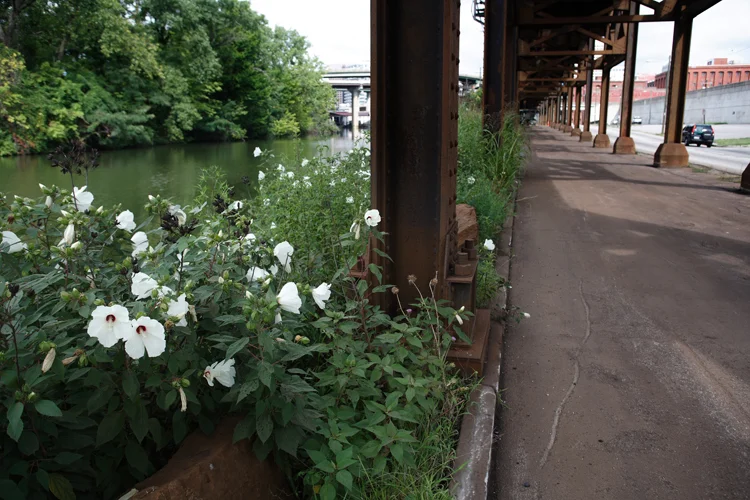
The Low Line Green:  Construction has begun on beautifying the portion of the trail in the City of Richmond near the Flood Wall by our friends at Capital Trees.  Here is what it will look like.

Canal Walk Connector To Brown's Island:  This project will improve the connection between Brown's Island, T-Potterfield Bridge, and the proposed Ashland to Petersburg Trail (40+ mile trail).  
More information can be found in the City of Richmond Capital Improvement Budget on page 72.  

These are very exciting times for the Virginia Capital Trail! The future is bright and full of great possibilities.

Thank You,

Cat Anthony
Executive Director

Photo Credit: M. Drumheller

Stay Active this Winter!

winter pic.jpg

embrace the cold - tips on staying active all winter long

January 8, 2020

During the winter months, it’s only natural to feel a bit sluggish and tired. Newly set fitness goals may seem harder than ever to achieve as temperatures drop but don’t give up. Check out these fitness tips on how you can embrace the cold and stay active this winter.

  1. Layer Up - Dress for the weather. Consider wearing gloves to protect your hands. Invest in a water and wind resistant jacket to keep out the chills. Be sure to wear a base layer and remember: above all - keep dry.

  2. Be Visible - Stand out and be seen. Wear reflective gear, brightly colored clothing, and use lights. A headlight or rear flasher will significantly increase your visibility.

  3. Prepare - Plan your route in advance and share your plans with a friend. Consider taking a more wooded route to help cut down on the wind. Pay attention to weather conditions and wind chills. If conditions are dangerous, be flexible and move your workout to a different time or day.

  4. Warm-Up - Add additional time to your warm-up session. If you don’t normally warm-up, consider adding a 10-15 minute warm-up routine during the winter months. Cold muscles don’t perform as well and are more prone to injury. It only takes a few minutes and your muscles will thank you later.

  5. Stay Motivated - Keep focused on your goals. Enter an event to help you stay motivated. The Winter Warrior Challenge is a great event to keep you moving all winter long. Challenge your friends for some friendly competition!

  6. Grab a Partner - Friends are great accountability partners and will help keep you motivated. If you can’t find someone to ride or run with, you can look into joining a cycling or running group like WAB, RABA, Richmond Road Runners, Colonial Road Runners, etc.

  7. Stay Hydrated - When it’s cold, you might not feel thirsty but it is more important than ever to stay hydrated. Fill your water bottle with warm water so it doesn’t freeze. Not only does hydration help regulate your body temperature but it can also give you a much-needed boost!

  8. Be Kind - Reward yourself for getting it done! Don’t be concerned with pace or mileage. Being active in the wintertime is more about conditioning and maintaining instead of crushing your times. Be proud of yourself for what you have accomplished. There are people who didn’t even get off the couch today!

Colder months can be frustrating but try to think of them as new adventures. The important thing is to stay active, be safe, and get outside! Think of all those calories you’ll burn!

Resources:

8 Tips for Better Winter Cycling by Tyrone Holmes

16 Winter Cycling Tips to Keep You Motivated and Battle the Winter Blahs by David Arthur

10 Tips to Make Winter Running Less Miserable by Yishane Lee

MY 15 YEARS WITH THE VIRGINIA CAPITAL TRAIL (PART 3 OF 3)

ted.2.jpg

MY 15 YEARS WITH THE VIRGINIA CAPITAL TRAIL:
THE future YEARS (2019 & Beyond)

PART THREE OF A THREE PART SERIES

DECEMBER 17, 2019

Memoir Part II ended in the Fall of 2018…

Earlier this year, Cat Anthony invited me to a VCTF Board meeting to talk about the Capital Trail Ambassadors. I spoke about how we did research on similar groups and modeled the VCT group after The Washington & Old Dominion Trail (W&OD) organization. The key learning from this research was: don’t make the group highly structured like club rides where there is a sign in, ride leader, and rigid schedule, instead just ask Ambassadors to “ride when they want and where they want.” I believe this concept has contributed significantly to our Ambassadors’ growth and success.

It was also at this meeting that Cat Anthony paid me the greatest, and very unexpected, compliment: she commented to the Board that I was one of two volunteers (Dean Dunbar being the other) she considered “staff members.”

A few final recollections that don’t fit into the rough timeline used as a framework for this memoir, but stand out from the first spade of dirt turned in 2005 to the world-class asset for our area that the Trail has become: 

  • Working with Beth Weisbrod, Executive Director before Cat Anthony. Few will ever understand how her leadership wove through a myriad of difficult situations to bring the Trail to life. 

  • Working with and observing VDOT and their strong ownership and responsiveness to Trail needs. These are dedicated folks who deserve our “Thanks” for their role in making the Trail what it is.

  • Working with Cat, Claire, and Cyndee, the current VCTF staff. They are a truly effective team, navigating their complex world while focused on making the user experience the best possible. 

And a few other folks who come to mind:

  • Dean Dunbar (often supported by Don Grosse and Neal Robinson) who has “owned” the Trail infrastructure. Lead coordinator with VDOT for repairs, maintenance and litter control for many years. Installer and maintainer of benches and bike repair stations along the Trail.

  • Angela Bright, a State of Virginia employee, who has spent five years of her “community service” days doing a litter clean up on the Richmond half of the Trail. 

  • Our Trail Ambassadors, (now 80 strong) who make the user experience a better one in so many ways.

ted.3.jpg

Looking forward, here are my hopes for the next five years of the Trail and the Foundation. 

  • Grow as a small business magnet to provide services to Trail users. There are several new businesses because of the Trail now, but there is room for more.

  • Grow further as a “destination” for cyclists and other Trail users across the US and internationally.

  • Continue to develop strong connections with the communities the Trail touches through outreach and engaging the community leaders and citizens.

And finally, although it will take longer than five years, I envision the VCT being interconnected with other trails to create a Virginia wide system of trails completely separate from road vehicles use. 

Thank you,

Ted Hanson
Virginia Capital Trail Ambassador
East-End Coordinator

MY 15 YEARS WITH THE VIRGINIA CAPITAL TRAIL (Part 2 of 3)

trail abassadors.jpg

MY 15 YEARS WITH THE VIRGINIA CAPITAL TRAIL:
THE recent YEARS 2012-2019

PART TWO OF A THREE PART SERIES

NOVEMBER 19, 2019

Memoir Part I ended the “go ahead” to start the Trail Ambassadors group in the Fall of 2012. 

However, before I continue the Trail Ambassador story, I need to backtrack to 2011 and 2012 and pick up two items.

After the trail surveys of 2010 and 2011, it was clear there was a need to get user count statistics as a measure of success for the VCTF Board and to use in outreach and grant applications. In 2011, the VCTF purchased three electronic counters for placement along the Trail. These were electric eyes to be placed about 18 inches off the ground that would count every time something (think bicycle) or being (think human or dog or deer) crossed the path. (Note: these counters were later replaced by a VDOT system.) 

Michael Luchs, a professor at William & Mary and I did a survey of the 6.5 miles of completed Trail in James City County. Upon survey results, one location decided upon was the Battle of Green Spring parking lot. We did have an “oops” moment as the sign post in which we installed the counter belonged to the local chapter of a national historic organization! I checked with them to get “after-the-fact” permission. They requested a formal letter signed by the Executive Director. Upon receipt, the President sent me an email: “unacceptable” as I had spelled the “Battle of Green Spring” as one word “Greensprings” and it must be Green Spring.  But, low and behold, the returned approval letter we received had misspelled the Trail name, using the word “Capitol” (the building) versus the correct “Capital” (the seat of government). I consulted with Beth Weisbrod and asked her, “Should I?” (tell him to correct the spelling), but we both laughed and just declared it a success.

My first recollection of a CAP2CAP event was from May 2011. However, it had already been an event since 2006. This year I got involved in doing signage for the routes in Charles City for the start out of Chickahominy Riverfront Park in James City County. I did signage duty for about 5-6 years until it was assigned to a contractor. This involved placement and uninstallation of about 50 route signs along the 25 and 50 mile routes. After a lot of help from Neal Robinson and others, it involved probably 8 hours of road duty each year. 

Now back to the Ambassadors...the approach was to recruit volunteers who would be trained to improve the Trail user experience by providing mechanical, medical and information assistance to those using the Trail. Of course, in 2012, this was largely a James City County activity, but as Co-Founder Chan Mohney lives in the Richmond area, he brought in two Richmond based folks to round out the ones from Williamsburg for a total of seven Ambassadors in the initial training classes.

Ambassador training, after a brief history of the Trail, was basically borrowed from the W&OD (Washington & Old Dominion Trail) “best practices” which Chan was granted permission to use. Things to do and not do…avoid confrontation, make suggestions about safety, assist those in need (mechanical and medical), and provide information (location of water, restrooms and other amenities).

Ambassadors received one hour of classroom training, followed by three hours of “on the trail” experience with Chan pointing out things to observe and report. At the end of the training, Ambassadors were provided with a logoed vest, first aid kit, business cards with Trail Rules and a QR code link to the Trail maps on the website. They are expected to wear a helmet as a good example, do two patrols a month April through October, and file a report within 48 hours. Until 2018, the reporting was done the old-fashioned way, writing an email to me with mileage, hours, sections covered and observations and hopefully photos. Yours truly then manually posted this data to an EXCEL and reported the results quarterly. (In 2018 VCTF staff automated these processes, Yeah!)

In three years, the Ambassador ranks grew from those 7 “Founding Members” in November 2012 to 30 plus members by the end of 2015.  That year the Ambassadors did 213 patrols for 560 hours and over 5000 miles!

skalak.jpg

Larry Skalak was a legendary Williamsburg area cyclist (his day job was as a home-building contractor). He passed away in 2014 while starting his fourth cross country bicycling trek. The Williamsburg Area Bicyclist (WAB) bike club decided to do something to remember Larry and his love of cycling. I have no recollection of how I got into this project, but I was soon leading the project with Dean Dunbar. After several meeting with Larry’s widow, June, we had a concept, a bench alongside the VCT. After nearly a year of planning and construction, the result was a world class pavilion with a bike rack, bench and Fixit station, alongside the VCT at Chickahominy Riverfront Park in James City County.

In 2017, I decided it was time after five years, to transition the leadership of the Trail Ambassadors to someone with a new vision and leadership direction. Before I could make this desire known, Beth Weisbrod announced that after 10 years leading the Trail from concept to completion, she would be “retiring”. When Cat Anthony came on board, she reached out to stakeholders in the VCT and asked to meet with me. In that meeting, I committed to delay my “retirement” for one year. Cat, true to her word, remembered our agreement and in the Fall of 2018, I transitioned into the role of East-End Ambassador Coordinator. But in a gratifying development since then, I regularly work with VCTF’s 2018 hire, Claire, to consult on Trail issues and concerns as well as outreach and marketing (to be continued…)!

Ted Hanson
Virginia Capital Trail Ambassador
East-End Coordinator


My 15 Years with the Virginia Capital Trail

IMG_20181020_131200638 (1).jpg

My 15 years with the Virginia capital Trail: The Early Years 2005-2012

Part One of a two part series

October 15, 2019

My nearly 15-year long association with the Virginia Capital Trail (VCT) began in July 2005 at the groundbreaking for the Greensprings section (the first section). Then Governor Mark Warner gave the keynote address and arrived on site with security in six large black SUVs. I rode my bike the 7 miles from home. The juxtaposition of my bike and all the eight mile per gallon SUVs sticks with me years later.

I had been an avid recreational cyclist since 1989 living in three other states, Virginia being the fourth. However, I was a little “spooked” by the Virginia roads and motorists. I moved here from Connecticut, which had already started building a paved multi-use trail, the Farmington Canal Heritage Trail, so I knew the benefits of riding with no vehicle concerns.

A year later in 2006, I was there as new Governor Tim Kaine did the ribbon cutting honors for the opening of the Greensprings section. The Trail was open to ride, or at least a small section of it was.

In the next couple years, sections in downtown Richmond and Charles City were completed.

At the time we Trail watchers thought it was a peculiar way to build a trail with a short section at both ends and then a stand-alone section in the middle, unconnected to either end. We would soon learn that this was intentional as the Virginia Secretary of Transportation, Whitt Clement, believed that it would be hard to not finish the Trail with 3 unconnected sections. His reasoning that if 20 miles were contiguous, that during a budget crunch the legislature might feel that was enough and truncate the completion of the 52 miles.

My next key recollection of Trail association is from October 2009, at the “Jamestown Volunteer Initiative”. This was a meeting led by Beth Weisbrod, Executive Director of VCTF at the time, and Leah Dempsey, VCTF Board member (Leah is still on the Board in 2019). The objective was “Identification of Potential Volunteer Opportunities”.  Six Williamsburg residents attended the meeting at the downtown Williamsburg Library (five of whom are still active and affiliated with the VCT in various ways).

Out of this meeting four volunteered to lead projects:

  1. Develop a “Friends of the Capital Trail”

  2. Find a site director for CAP2CAP (which was based at Chickahominy Riverfront Park)

  3. Conduct a Trail User Study

  4. Develop a database of volunteers

The results: The Friends and database of volunteers evolved over time as the VCT Trail Ambassadors and its related roster; a CAP2CAP site director was engaged; and a user study was conducted in both 2010 and again in 2011, providing valuable insight into who used the trail.

Key findings from the User Survey were that 75% of users were Williamsburg residents, 20% were from other parts of Virginia with 5% from out of the state. Also 70% of the users were cyclists versus 30% runners/walkers. Yes, things have changed in the years since, with the majority of users now from Richmond and out of the area.

During 2010 and 2011 a couple of us researched “Friends of the Trail” groups, and then visited two trails (C&O Trail and the W&OD Trail, both in the DC area) to get first-hand feedback on “Friends” groups. The visits include discussing the administrative aspects and “shadowing” some team members on one of their patrols. The learning was almost identical from these two visits and the Trail Patrol (now Trail Ambassadors) organization was modeled after the best practices gleaned from these two other trails.

Then in mid-2012, I got an unexpected email from Chan Mohney, who was retiring to Richmond and had been a trail patrol member on the W&OD for many years. We agreed to meet for lunch in Williamsburg. Out of that meeting, the Ambassadors blueprint was proposed to Beth Weisbrod. She took the concept to the VCTF Board and after approval we started on our Trail Ambassador journey (to be continued…)!

Ted Hanson
Virginia Capital Trail Ambassador
East-End Coordinator

Style Weekly: Stories for Miles

Style Weekly: Stories for Miles

One of the most spectacular views of the Richmond skyline is best accessed by bicycle.

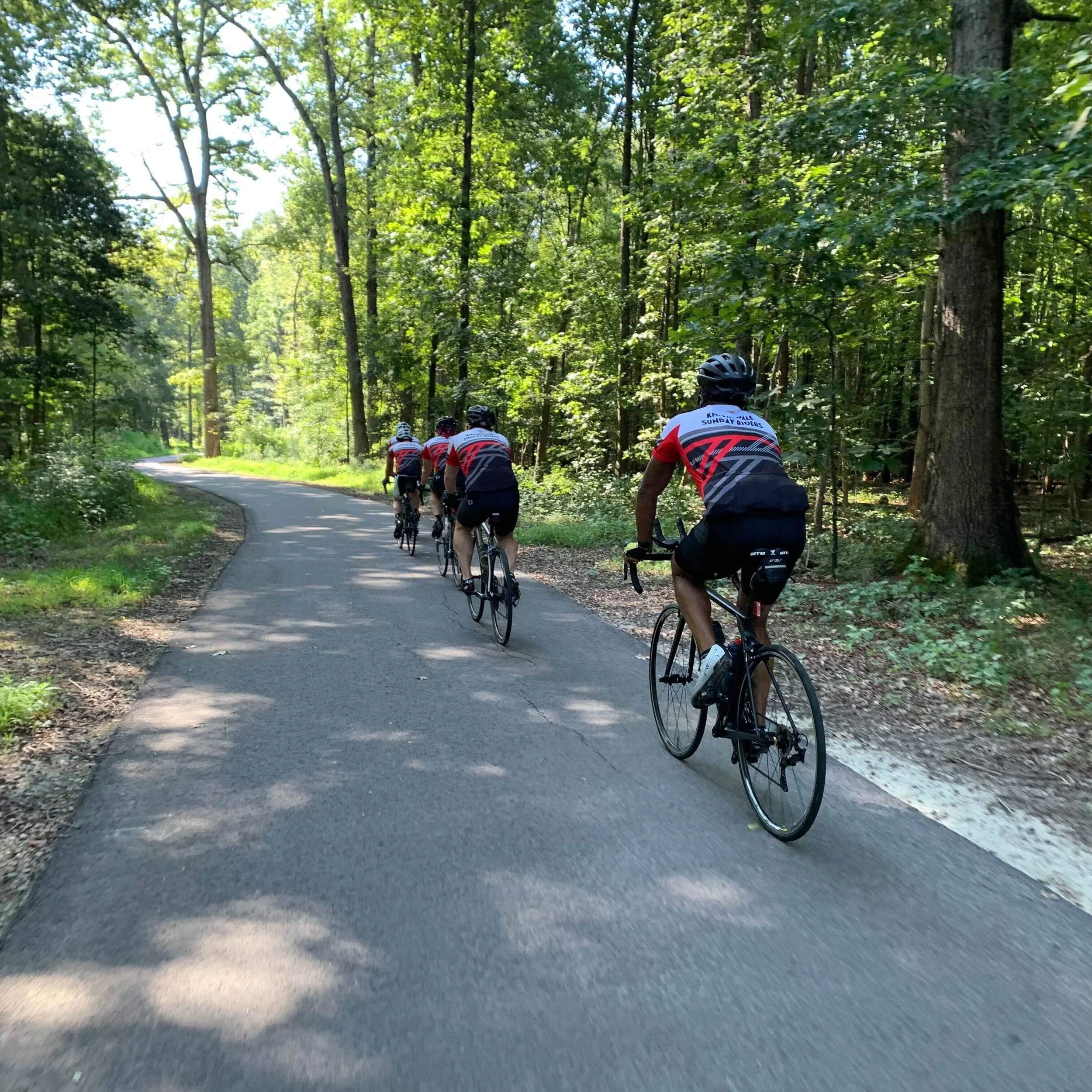
About 2 miles from Great Shiplock Park, a winding portion of the Virginia Capital Trail turns a bend. There, among a stretch of rolling hills, the cityscape suddenly appears in the distance. It's a scenic, poignant reminder that city and nature co-exist in synchronicity. And if you're wrapping up an hours-long bike ride, it's a welcome indication that you're almost home.

Exciting News from VCTF Executive Director

Exciting News from VCTF Executive Director

Dear Cap Trail User,

We have a ton of exciting updates about the Capital Trail.  First is that the Virginia Capital Trail Foundation requested a safety study to be completed on the Charles City County portion of the Capital Trail and it is happening! Next month there will be an online survey released for users to complete to give their feedback. Stay tuned for the survey next month.

Secondly, we are excited to see the Mayor's budget with the City of Richmond asked for funding a couple of great initiatives that will have an effect on the Capital Trail. Here are those Capital Improvements:

VCTF Receives MLP Grant

VCTF Receives MLP Grant

The Virginia Capital Trail Foundation is pleased to announce that we have received matching grant funds from the Virginia Tourism Corporation’s (VTC) Marketing Leverage Program (MLP). The grant is for $5,000 and utilized James City County, Henrico County, and Richmond Region Tourism as partners to create a weekend getaway campaign focused on the Virginia Capital Trail.

Cap2Cap Training Tips

Cap2Cap Training Tips

Training is different for everyone but there are some universal tips to help any rider. One of the best things about Cap2Cap is that it’s a non-competitive, fully supported ride so it’s great for beginners or experienced cyclists looking to test themselves. We’ve consulted Cap2Cap participants and the Trail community about best practices for training for your 23, 52, or even 100-mile rides on May 11th!

Identify Your Starting Point

Are you a regular rider or is this your first time getting on a bike in years? Regardless of where you start, it’s important to go on a ride to find your benchmark. You may find you can only do 15 now but you’re looking to train for 20+ miles. Knowing your starting point will help you identify and set realistic goals so get out on the Trail and ride!

History of the Capital Trail

History of the Capital Trail

The Virginia Capital Trail was the result of a public-private partnership between the Virginia Department of Transportation and the Virginia Capital Trail Foundation. Founded in 2004, the Virginia Capital Trail Foundation’s mission is to enhance, promote, and advocate for the continued development of the trail. The Virginia Capital Trail Foundation promotes the trail regionally, at the state level, and at the national level, through partnerships and larger trail affiliations. Additionally, the Foundation is also responsible for making experiencing the trail a safe, educational, and unforgettable experience for users by supplying signs, trailheads, benches, as well as many more amenities.

The Virginia Capital Trail, located along the route 5 corridor, spans a range of fifty-two miles, connecting Virginia’s current capital of Richmond to its former, Jamestown. Construction of the trail began in 2005, and concluded nearly a decade later.  

The Greenspring phase of the trail was opened in 2006. This phase consists of a 2.8 mile stretch of trail that begins near Colonial Parkway near Jamestown, ending at Jamestown High School.  

The Chickahominy Riverfront phase, completed in 2007, spans from the Greensprings phase to James City County’s Chickahominy Riverfront Park. Two years later, in 2009, construction was completed on the Charles City Courthouse phase. This eight-mile section spans from the Charles City Courthouse to VCU’s Rice Center for Environmental Life Sciences.  

The next phase to be completed, the Richmond Riverfront phase, marks the end of the Virginia Capital Trail. This phase consists of three sections. The first section runs from Canal Walk to the Great Ship Lock Park. The second section of the Richmond Riverfront is a three-quarter-mile long segment beginning at the Great Ship Lock Park and ending at the Intermediate Terminal. The last section is one mile in length, running through Rockett’s Landing. The Richmond Riverfront also  connects the trail to Shockoe Bottom’s retail and residential areas.

The Sherwood Forest phase opened in 2014. This 12.5-mile-long section of trail connects the western bank of the Chickahominy River to the Charles City County Courthouse. Completed the same year was the Park phase. Spanning 3.5 miles, this section runs from east of Wood Mill Drive to Four Mile Creek. This section was aptly named due to its proximity to the Dory and Four Mile Creek parks.

The final two phases to be completed, Varina and New Market Heights, located in Henrico County, opened in 2015. The Varina phase of the trail spans 7.6 miles, ending just shy of Richmond. The New Market Heights phase is 10.5 miles long and ends near VCU’s Rice Center for Environmental Life Sciences in Charles City County.

As you travel along the trail, you will encounter the rich history of Virginia. Many of these phases have plantations and other attractions, full of history, running throughout. There also many places to rest, relax, dine and explore along your journey.

Best Darn Place It Can Be

For those who’ve not had the chance to cover every mile of the Virginia Capital Trail, a recent podcast presents a terrific opportunity to learn about its offerings from one of those who know it best. Cat Anthony, the new Executive Director of the Virginia Capital Trail Society, was just interviewed by Richmond Outside’s “View From the Treehouse”. Set in an actual tree house (it’s not just a clever name), the half hour conversation gives listeners a chance to learn more about one of Richmond’s greatest community drivers, and where to get the best beers along the way.

The Virginia Capital Trail sounds intimidating. A 52 mile track from Richmond’s Riverfront to James City County near Williamsburg, VA, the bird’s eye view of the trail can seem a little daunting to those new to cycling, the outdoors, or Richmond in general, and this interview helps break it down into more manageable bites. It also focuses on what many would consider to be the true point of the trail: Get outside and have fun!

Most of the Trail’s exposure lies in the Cap2Cap Trail, a bike event that allows for 15, 25, 50, and 100 mile treks. It gets good advertising, helps raise funds for trail maintenance, and promotes a healthier lifestyle for many.

(Registration now open for a ride on May 12.)

What a lot of people don’t know is that they can use the trail for much more than ‘JUST’ exercise. Along its length, the Trail serves as a stop for multiple restaurants and microbreweries, natural parks and scenic views. It has been used by families with strollers, elderly who enjoy the safety of the trail for their exercise, commuters, and the hard core cyclists that many assume to be the primary users of the trail. It runs from the urban background of Rockett’s Landing in Richmond, through some of Eastern Virginia’s most beautiful rural landscapes.

This is where Cat comes in. With a tally of uses approaching 1.3 million, her goal is to expand and improve what we have, and help encourage those who live along the trail to get out and use it in whatever way they feel most comfortable. The greatest risk to the trail, she feels, can be summed up in one word: stagnation. “We have to keep maintaining it, and building businesses around it.” With aspirations of a new connector in Williamsburg, additional decoration, improved safety measures, and a map of the trail that includes local restaurants and watering holes, her drive to make this a true destination is a journey that will require community support.

                “I would like to see more art along the trail. I want to make it a destination. If I had lots of money, I would like to connect the trail from James City County to Colonial Williamsburg. I see that connector trail as very, very important. You can come into Richmond and connect to a hotel easily, but coming from James City County to a hotel is much more challenging. I would love to see that connector trail…I would like to have our office on the trail. Where we have someone at the front desk to answer questions, and be that ambassador for the trail. I would expand our Trail Ambassador Program, and our volunteer program.”

Listen to the podcast. There’s a clear joy in Cat’s interview, and a passion for the outdoors and for Richmond that can’t be conveyed in writing –even the interviewers, both familiar with the trail, have trouble containing their excitement for this phenomenal resource. The overall message to take away from the interview is this: The trail is whatever you want it to be and we need your help to make it the best it can be for everyone. Don't believe me? Check out their Instagram and tell me that it doesn't look like fun. Cat’s desire to make it the “Best Darn Place it Can Be” will go a long way, but ultimately, the Trail is a community resource, and we need to add our voices to the advocacy, our sweat to the development, and our love to this outdoor space.

Also, for the record, her favorite curse word is (expletive deleted).